






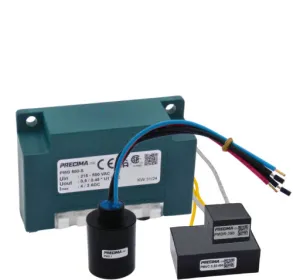
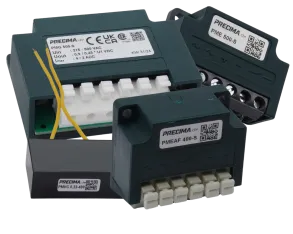
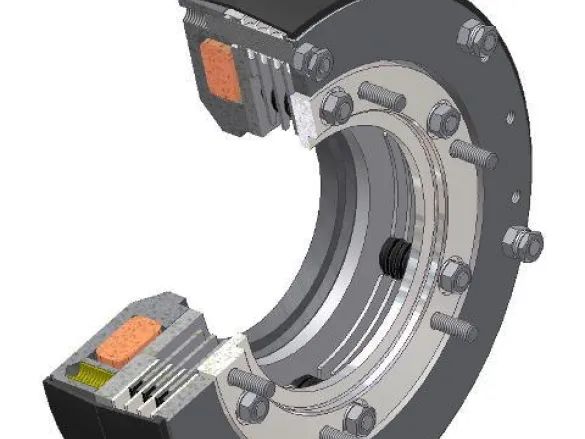


How do I choose the right rectifier for my application?
The appropriate rectifier is selected based on the available supply voltage, the brake type, and the required braking torque.
Supply Voltage 230 VAC
With a supply voltage of 230 VAC, the following rectifiers can generally be used:
- Half-wave rectifier
- Bridge rectifier
- Fast excitation rectifier
Fast excitation rectifier
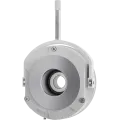
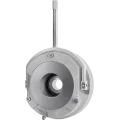
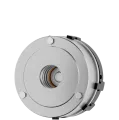
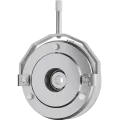
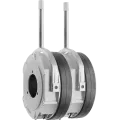
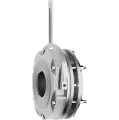
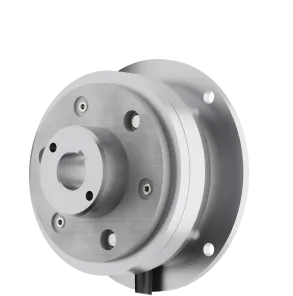
The use of a fast-switching rectifier is particularly necessary for brake types FDX and FDR. The integrated over-excitation ensures that the brake releases reliably and completely.
For FDB and FDW brake types, a fast-switching rectifier is generally only necessary for higher braking torques. Due to the increased spring forces, brief over-excitation is required to ensure safe release of the armature disc.
Bridge Rectifier
The bridge rectifier is used exclusively with a supply voltage of 230 VAC. With its high conversion factor of approximately 0.9, it generates a supply voltage of approximately 205 VDC from 230 VAC.
Half-wave rectifier
The half-wave rectifier can be used with supply voltages up to 600 VAC. With a conversion factor of approximately 0.45, it generates the DC voltage required for the brake.
Since over-excitation is not possible with a half-wave rectifier, it is typically used in brakes with rated braking torque or lower braking torques. In these applications, the spring forces are comparatively low, so that reliable release can be ensured even without additional over-excitation.
In summary
FDX / FDR: A fast-switching rectifier is generally required.
FDB / FDW: Fast-switching rectifiers are required only for higher braking torques.
Bridge rectifiers: For 230 VAC only; produces approximately 205 VDC.
Half-wave rectifiers: Suitable for voltages up to 600 VAC, but without an overexcitation function.
The selection always depends on the supply voltage, brake type, and braking torque.